| Situation | Best Option |
|---|---|
| Regular update | **OTA** |
| OTA failed or system unstable | **Type-C Cable** |
| Device won’t start / “bricked” | **SD-Card** |
**🛠️ Legacy Manual Method (Older Versions Only)** The guide and video walkthrough below apply **only** if you are flashing older versions prior to v1.0.0.dev4. **Image Compatibility:** Newer firmware images (v1.0.0.dev4 and above) use an updated format that is entirely incompatible with legacy tools in the below guide. Do not attempt to use the manual guide below on the latest images, as the flashing process will fail.
Before you begin, we highly recommend watching the **video walkthrough** — it shows the entire flashing process from start to finish in real time. In the video, you’ll see **exactly what happens on screen and on the SMHUB device**Hint: if your path is long for typing, copy it, and in CMD enter cd + do right click. This will insert Clipboard content into CMD window.
[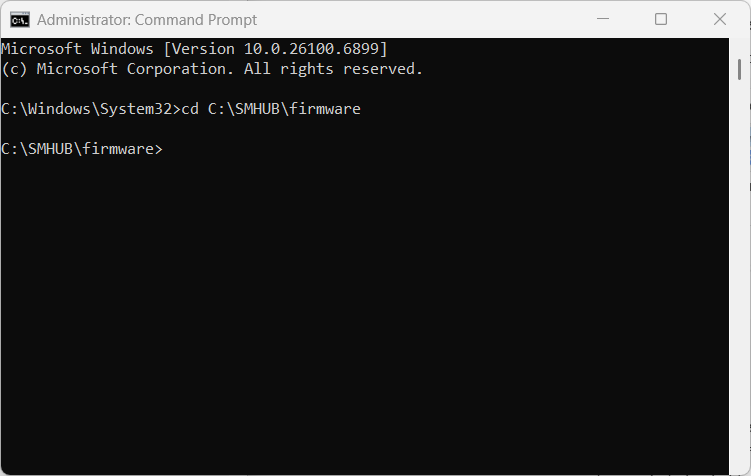](https://smlight.tech/support/manuals/uploads/images/gallery/2025-10/yfjimage.png) --- ### 6) Start the flashing script **Important:** **Do not** connect the SMHUB yet. The script need to be run first. Run: `flash.bat` By typing this command `flash.bat` and pressing **Enter** button. [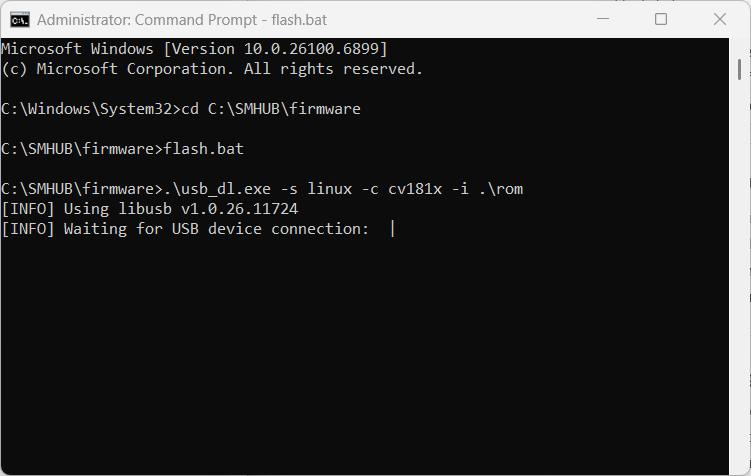](https://smlight.tech/support/manuals/uploads/images/gallery/2025-10/ncyimage.png) --- ### 7) Now connect the SMHUB When `flash.bat` is running, **connect SMHUB to the PC via USB-C** (Type-C port on the back of SMHUB, near Ethernet port) The script will detect the device and begin flashing automatically. You’ll see progress output in the CMD window. > If nothing happens for ~a while, try another USB port or USB-C cable, but **keep the script running** while you reconnect the cable. > > [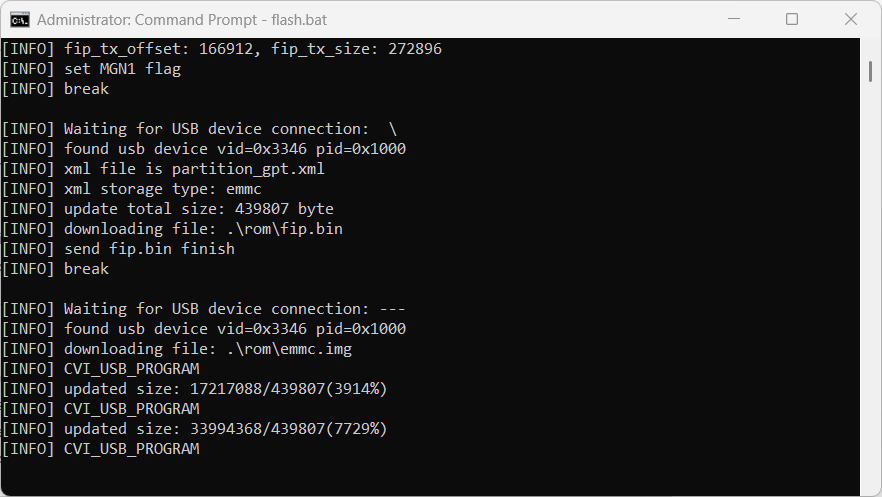](https://smlight.tech/support/manuals/uploads/images/gallery/2025-10/CArimage.png) --- ### 8) Wait for “Flashing completed” (script finishes) - When the script completes, it will show a success message and return to the prompt or close. [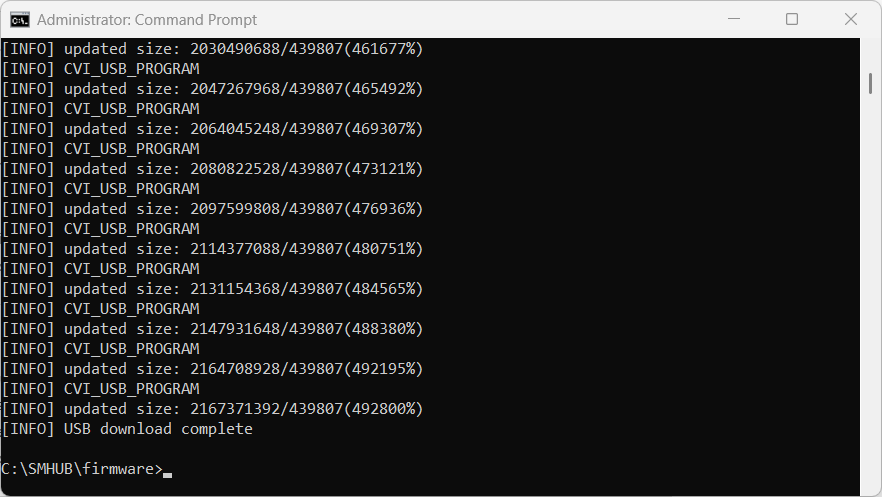](https://smlight.tech/support/manuals/uploads/images/gallery/2025-10/9NMimage.png) - You can now safely disconnect the SMHUB from the PC and power it normally (via its regular power supply), **or** leave USB-C connected if it provides power. --- ### **8-b) IF THE FLASHING PROCESS DOES NOT START** In some cases, removing the PoE add-on may help to start the flashing process successfully. If your device does not start flashing using either the Type-C or SD-Card method, please follow the steps below: 1. Open the enclosure (no screwdrivers are required, as the enclosure is screwless). 2. Physically disconnect the PoE add-on. [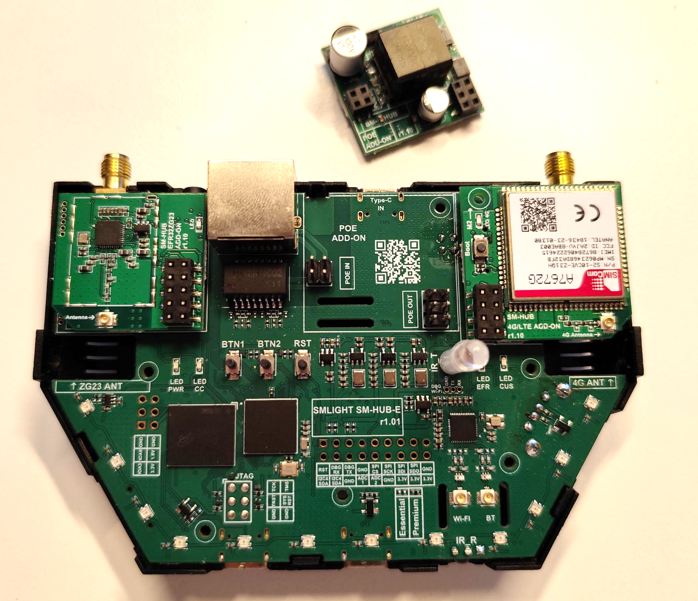](https://smlight.tech/support/manuals/uploads/images/gallery/2025-10/xfhimage.png) 3. **To be even more secure, please remove 4G and Z-Wave addons if you have them installed.** 4. Start the flashing process again. Try to boot without the add-on first. Once the device flashes and boots successfully, you can reinstall the add-on. --- ### 9) First boot and LED cues (what “ready” looks like) **First start takes longer than subsequent boots.** This is normal. When the SMHUB starts up after flashing, the LEDs show you exactly what’s happening. Here’s what to watch step by step: 1. **Power ON indicator:** As soon as you plug in the SMHUB, the **small green LED near the buttons** (not the Ambilight LEDs) turns **ON**. → This simply means the device is receiving power. If you can't power your device - check [this](https://smlight.tech/support/manuals/books/smhub/page/troubleshooting#bkmrk-9.1-power-%26-boot) bug. [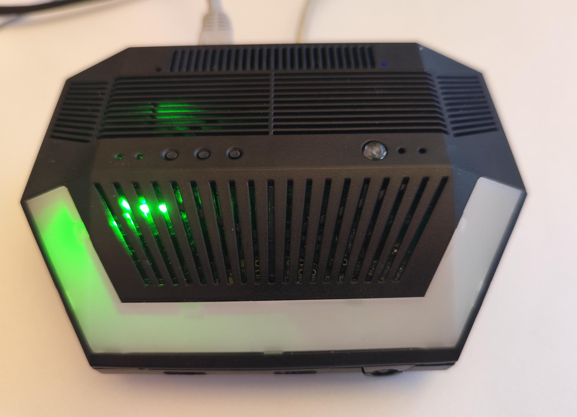](https://smlight.tech/support/manuals/uploads/images/gallery/2025-10/Lhzimage.png) 2. **Blue chase effect (Ambilight):** Right after powering on, you’ll see a **moving blue light** (chase effect) running around the Ambilight LEDs. → This means the system is booting — please wait. [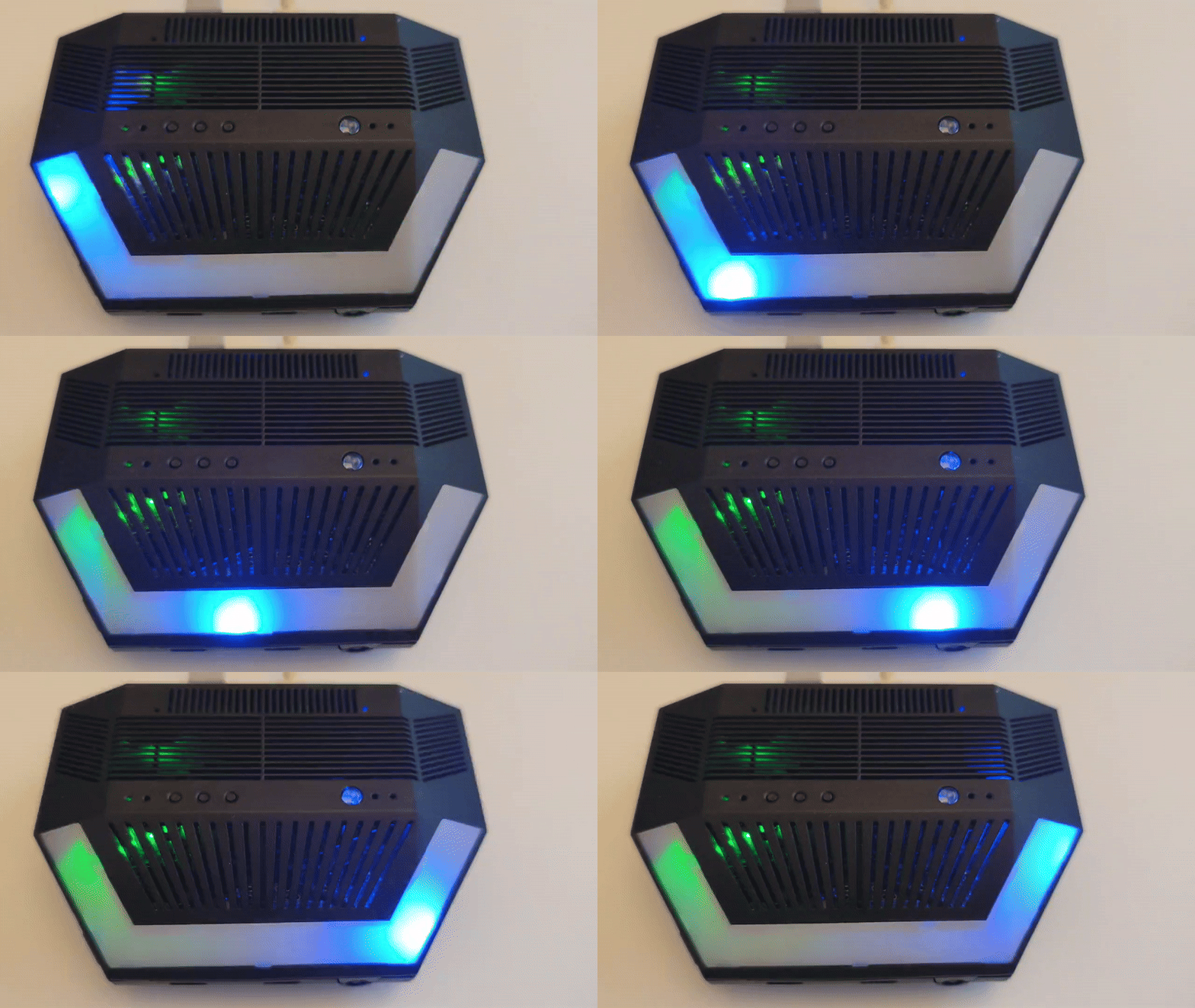](https://smlight.tech/support/manuals/uploads/images/gallery/2025-10/smhub-rotating.gif) 3. **Blue effect stops:** When the **blue chase effect stops**, it means the **core system has finished booting** and **SSH access is available**. → From this point, advanced users can connect via SSH if needed. [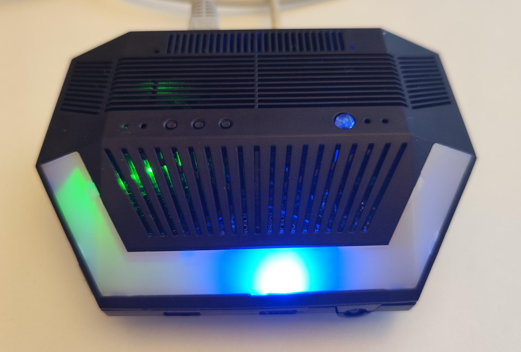](https://smlight.tech/support/manuals/uploads/images/gallery/2025-10/YAtimage.png) 1. **Green Ambilight turns on:** After the delay (1-2 min), all **green Ambilight LEDs will light up at once.** → This means that **Web UI and all apps are fully loaded** and ready to use. [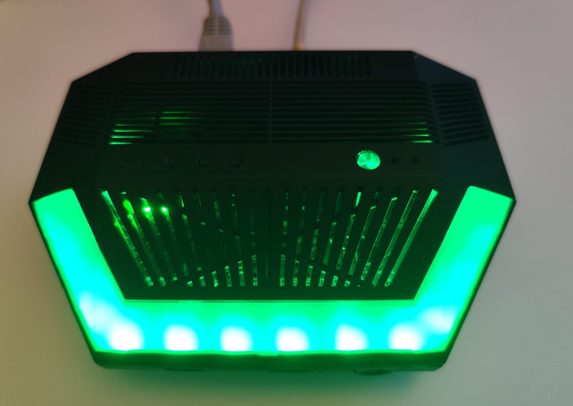](https://smlight.tech/support/manuals/uploads/images/gallery/2025-10/3wLimage.png) The green lights will stay on for about **1 minute**, then turn off automatically. > 💡 **In simple words:** > > - Blue moving lights = starting up > - Blue stops = system ready for SSH > - Green lights = Web interface ready to use --- ### 10) (Optional) Quick post-flash checks **Web UI:** - Open a browser and go to: `http://smhub.local/` (or your device’s IP). [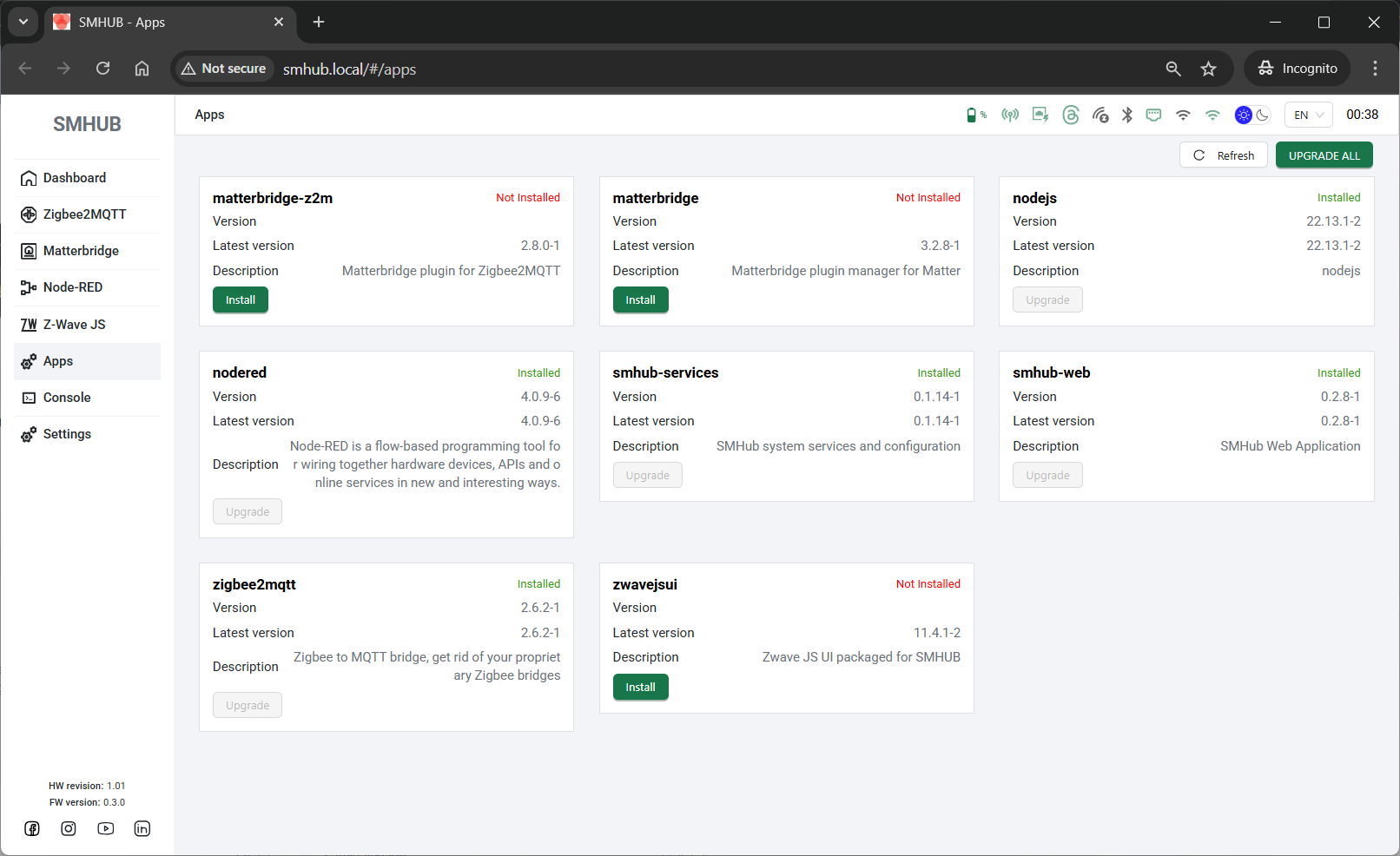](https://smlight.tech/support/manuals/uploads/images/gallery/2025-10/WeYimage.png) **SSH (from Windows using built-in OpenSSH or PuTTY):** - Hostname: `smhub.local` (or your device’s IP) - Username: `smlight` - Password: `smlight` --- ## Troubleshooting ### A) The script doesn’t detect my device - **Most likely cause:** Device connected **before** `flash.bat`. **Fix:** Close the script, **unplug** SMHUB, re-run steps 4–7 exactly: admin CMD → `flash.bat` → **then** connect SMHUB. - Try a different USB port or another **data-capable** USB-C cable. ### B) Driver didn’t install or Windows blocked it - Re-run `driver\smhub-driver.exe` as admin. - Approve any Windows prompts. - Reboot Windows if the installer requests it, then try again. ### C) “Access denied” or “cannot open port” - You’re likely not in an **Administrator** CMD. Close CMD, re-open **as Administrator**, repeat from step 5. ### D) Flashing stops or errors out mid-way - Leave the CMD window open; wait a bit to ensure it’s not still working. - If it clearly failed, **unplug** SMHUB, close the CMD, reopen **admin** CMD, start `flash.bat` again, and **only then** plug SMHUB back in. ### E) SSH/Web UI doesn’t come up after flashing - Give the device more time on the first boot. - Watch the LEDs: - **Blue ambilight LED stopped running** → SSH should be ready. - **All ambilight greens lit** → Web UI should be ready. - If still nothing, power-cycle the SMHUB and check your network/DHCP (try accessing by IP, not by hostname). # Update/Restore using SD-Card**💾 SD-Card Installation Guide Notice** The direct SD-card installation method is **temporarily unavailable** for the latest OS images. **Workaround:** If you must use an SD card, you can flash an older compatible image first, boot the device, and perform an OTA update to the latest version. Otherwise, we highly recommend skipping the SD card entirely and using the new [SMHUB Flasher](https://github.com/smlight-tech/smhub-flasher/releases) tool over Type-C for a direct install.
👉 **Download the firmware ZIP** from your usual link (latest): SD-CARD RESTORE FIRMWARE: **prod**: [os\_v0.9.9](https://updates.smlight.tech/firmware/smhub/os/smhub_os_v0.9.9.zip) , **dev**: [os\_v1.0.0.dev3](https://updates.smlight.tech/firmware/smhub/os/smhub_os_v1.0.0.dev3.zip) (previous: [os\_v0.3.11](https://updates.smlight.tech/firmware/smhub/os/smhub_os_v0.3.11.zip) \| [os\_v0.3.10](https://updates.smlight.tech/firmware/smhub/os/smhub_os_v0.3.10.zip) \| [os\_v0.3.7](https://updates.smlight.tech/firmware/smhub/os/smhub_os_v0.3.7.zip)) and save the ZIP file to your computer (e.g., `Downloads`). You’ll need: - A **microSD card** (8–64 GB is ideal) + **microSD–to–SD** adapter if your PC needs it - A Windows PC - A way to read/write the microSD card (built-in reader or USB adapter) ### ⚙️ What You’ll Do 1. Download the ZIP file with the firmware 2. Format microSD to **FAT32** 3. Copy **three files** from the archive folder ROM onto the **root** of the card 4. Insert the card into the SMHUB (**click** fully) 5. Power on → **wait ~4 minutes** (silent) 6. Power off → **remove the card** 7. Power on → watch LED cues → open **smhub.loca** --- ## 1) Get the firmware and unzip it 1. Click the firmware link above and **download the ZIP** to your computer (e.g., Downloads). *\[screenshot: browser download\]* 2. **Right-click** the ZIP → **Extract All…** → choose a simple folder (e.g., `C:\SMHUB\firmware\`). Inside the unzipped folder, you’ll see these **three files** in the **rom** folder. You’ll copy them to the SD card: - `emmc.img` - `fip.bin` - `partition_gpt.xml` --- ## 2) Format the microSD card to **FAT32** > This erases the card completely. Back up anything important first. 1. Insert the **microSD** (or SD adapter with the microSD inside) into your PC. 2. Open **This PC** (Windows Explorer). 3. **Right-click** the SD card drive (e.g., “SDHC (E:)”). 4. Click **Format…**. [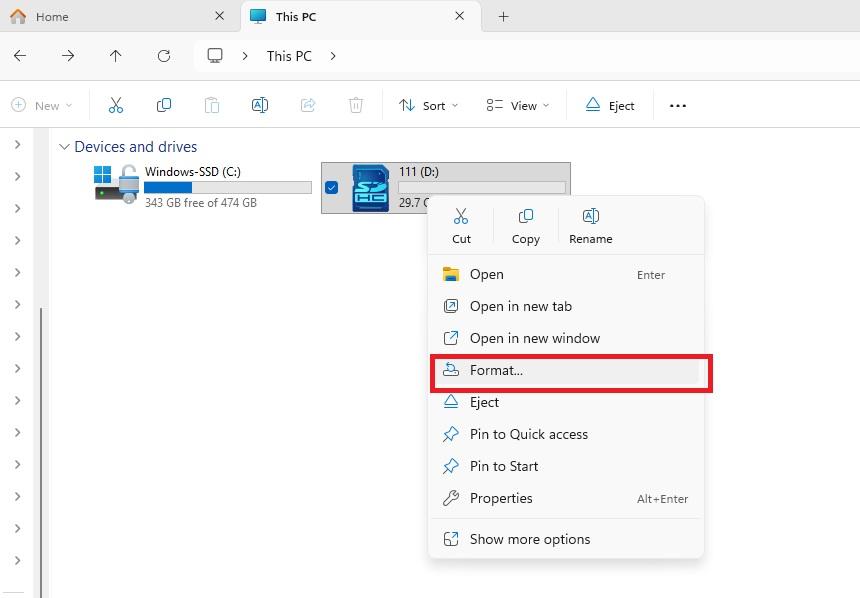](https://smlight.tech/support/manuals/uploads/images/gallery/2025-10/select-format.jpg) 5. In the **Format** window: - **File system:** choose **FAT32** - **Allocation unit size:** leave **Default or 16kb** - **Volume label:** optional (e.g., `SMHUB`) - **Quick Format:** **checked** (recommended) [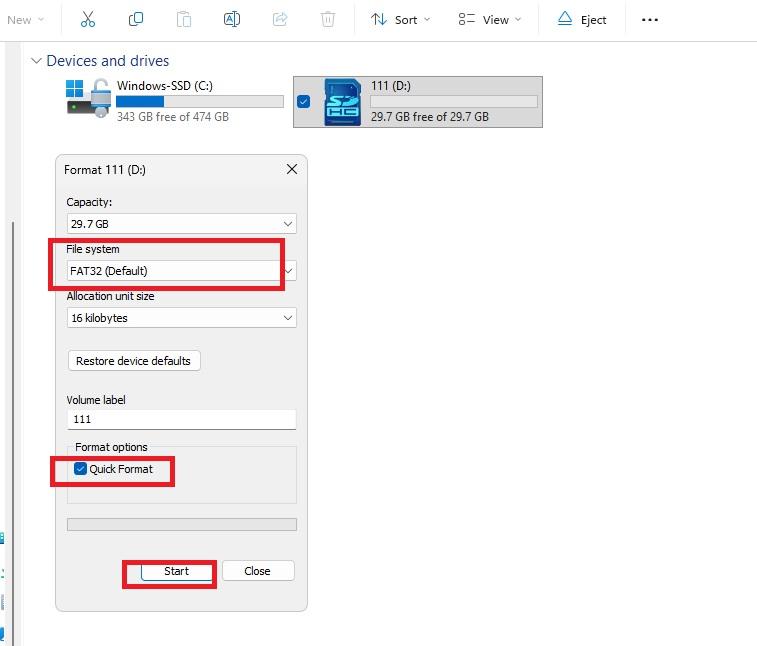](https://smlight.tech/support/manuals/uploads/images/gallery/2025-10/format-settings.jpg) 6. Click **Start**, then **OK/Yes** to confirm. 7. Wait for the **Format Complete** message → click **OK** and **Close**. [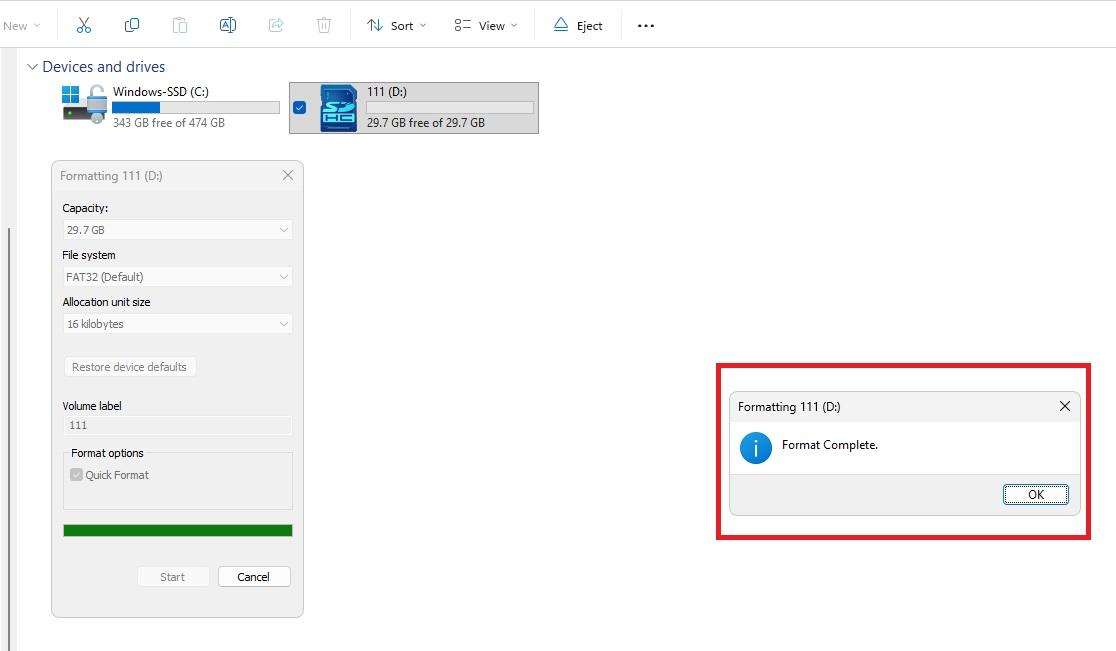](https://smlight.tech/support/manuals/uploads/images/gallery/2025-10/format-completed.jpg) > **Tip:** If your SD card is larger than 32 GB and FAT32 isn’t shown, try another (smaller) card. (Advanced users: a third-party FAT32 formatter also works.). > **Check the lock switch:** If you’re using a full-size SD adapter, make sure the **tiny switch on its side is not set to “LOCK.”** If locked, Windows won’t let you copy files. --- ## 3) Copy the **three files** to the **root** of the SD card 1. Open the folder you unzipped earlier. 2. **Select these three files:** `emmc.img`, `fip.bin`, `partition_gpt.xml` 3. **Copy** them (Ctrl+C). 4. Open your SD card drive in **This PC** and **Paste** (Ctrl+V). - The files must be in the **root** of the SD card (not inside any folder). [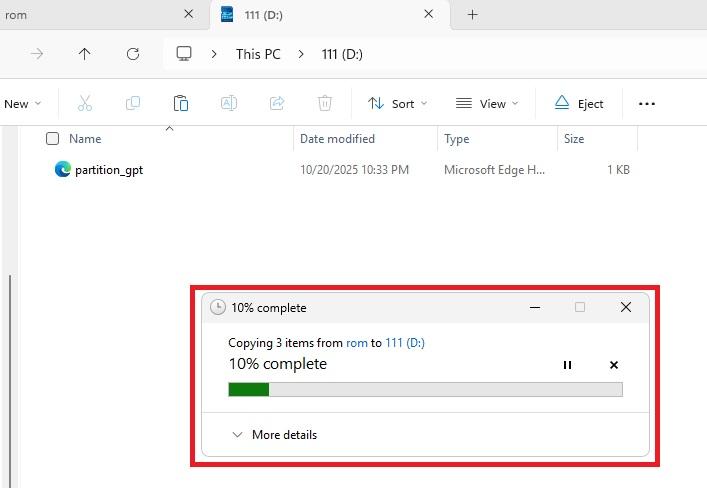](https://smlight.tech/support/manuals/uploads/images/gallery/2025-10/copying-to-sdcard.jpg) 5. When copying finishes, **right-click** the SD card drive → **Eject** → remove the card. --- ## 4) Insert the microSD card into the SMHUB - With the SMHUB **powered OFF**, insert the microSD into the slot. [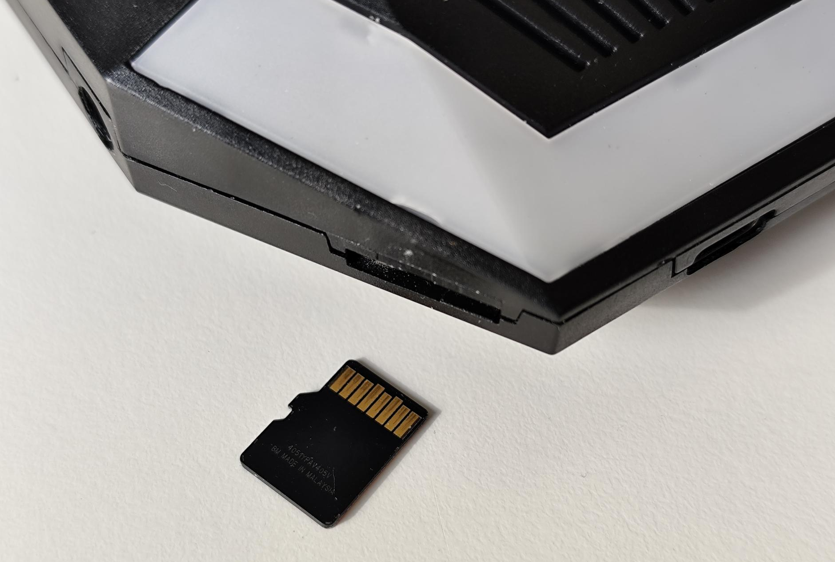](https://smlight.tech/support/manuals/uploads/images/gallery/2025-10/VTRimage.png) - **Push until you feel a “click.”** It must be fully seated. [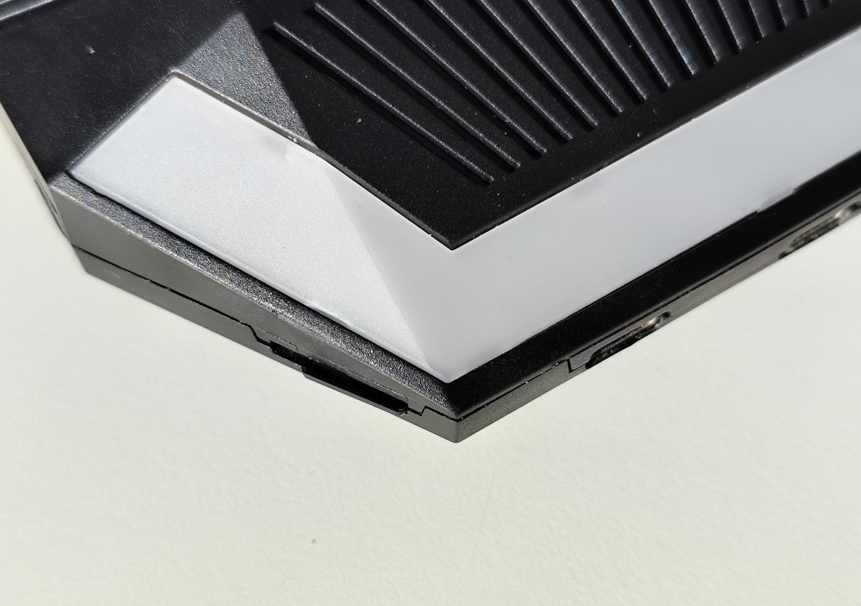](https://smlight.tech/support/manuals/uploads/images/gallery/2025-10/M5mimage.png) --- ## 5) Power ON and **wait ~4 minutes until completion** - Connect power to the SMHUB. - The device will automatically and silently flash itself from the SD card. - The blue LED (located near the IR transmitter) will begin blinking slowly (approximately once every 2 seconds), indicating that the flashing process has started. Please note that LED indications during SD-card flashing are available only starting from firmware **0.3.1-dev2 (24 Oct 2025)**. [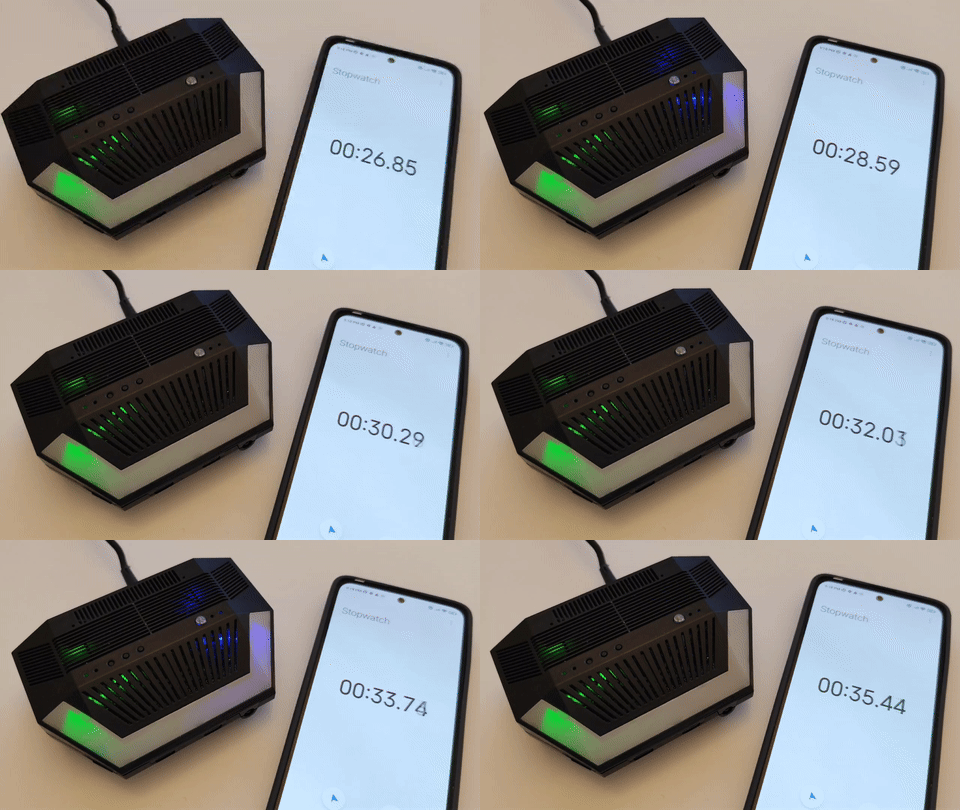](https://smlight.tech/support/manuals/uploads/images/gallery/2025-10/smhub-flashing-sd-card.gif) - Once the process is complete, the same blue LED will start blinking faster (about 3 times per second). This means the flashing was successful. You can now disconnect the device from power (fully disconnect it — do not simply reboot). There is no need to power it on again with the SD card inserted, as the flashing process would otherwise start again. [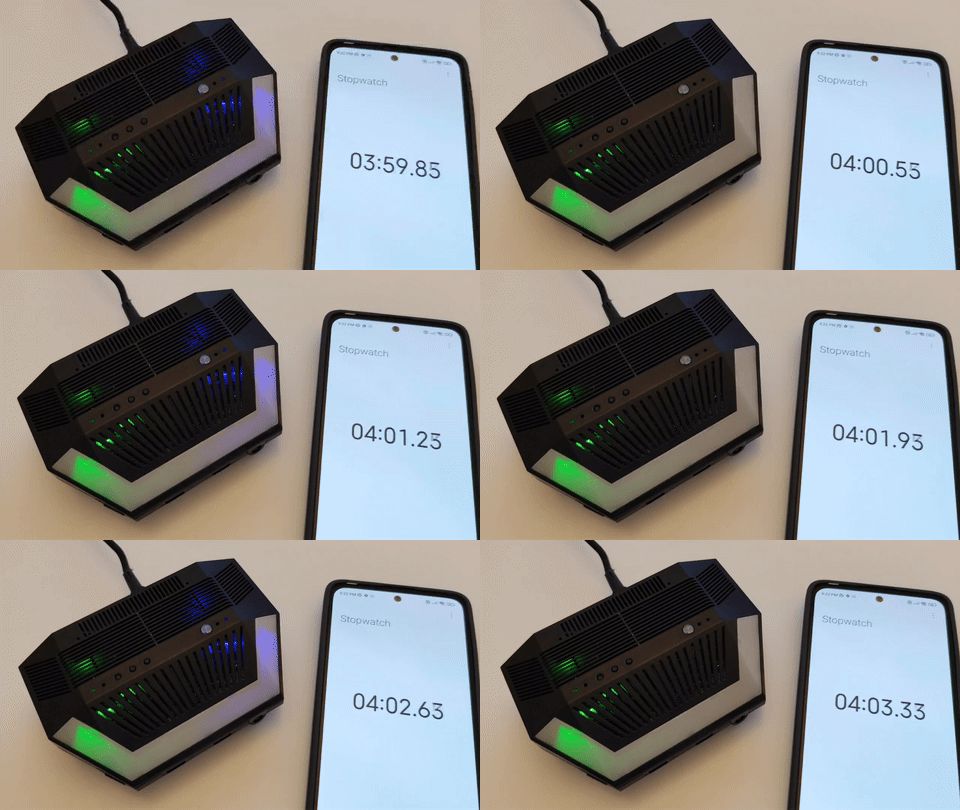](https://smlight.tech/support/manuals/uploads/images/gallery/2025-10/smhub-flashing-sd-card-completed.gif) --- ## **5-b) IF THE FLASHING PROCESS DOES NOT START** In some cases, removing the PoE add-on may help to start the flashing process successfully. If your device does not start flashing using either the Type-C or SD-Card method, please follow the steps below: 1. Open the enclosure (no screwdrivers are required, as the enclosure is screwless). 2. Physically disconnect the PoE add-on. [](https://smlight.tech/support/manuals/uploads/images/gallery/2025-10/xfhimage.png) 3. **To be even more secure, please remove 4G and Z-Wave addons if you have them installed.** 4. Start the flashing process again. Try to boot without the add-on first. Once the device flashes and boots successfully, you can reinstall the add-on. --- ## 6) Power OFF and **remove the SD card** - After ~5 minutes, **power OFF** the SMHUB. - **Remove** the microSD card. > ⚠️ **Important:** If you **leave the SD card in** and power on, the SMHUB will **start flashing again**. Always **remove the card before** the next boot. --- ## 7) Power ON again and watch the LEDs (readiness) Boot the SMHUB **without** the SD card: **First start takes longer than subsequent boots.** This is normal. When the SMHUB starts up after flashing, the LEDs show you exactly what’s happening. Here’s what to watch step by step: 1. **Power ON indicator:** As soon as you plug in the SMHUB, the **small green LED near the buttons** (not the Ambilight LEDs) turns **ON**. → This simply means the device is receiving power. If you can't power your device - check [this](https://smlight.tech/support/manuals/books/smhub/page/troubleshooting#bkmrk-9.1-power-%26-boot) bug. [](https://smlight.tech/support/manuals/uploads/images/gallery/2025-10/Lhzimage.png) 2. **Blue chase effect (Ambilight):** Right after powering on, you’ll see a **moving blue light** (chase effect) running around the Ambilight LEDs. → This means the system is booting — please wait. [](https://smlight.tech/support/manuals/uploads/images/gallery/2025-10/smhub-rotating.gif) 3. **Blue effect stops:** When the **blue chase effect stops**, it means the **core system has finished booting** and **SSH access is available**. → From this point, advanced users can connect via SSH if needed. [](https://smlight.tech/support/manuals/uploads/images/gallery/2025-10/YAtimage.png) 1. **Green Ambilight turns on:** After a short delay, all **green Ambilight LEDs will light up at once.** → This means that **Web UI and all apps are fully loaded** and ready to use. [](https://smlight.tech/support/manuals/uploads/images/gallery/2025-10/3wLimage.png) The green lights will stay on for about **1 minute**, then turn off automatically. > 💡 **In simple words:** > > - Blue moving lights = starting up > - Blue stops = system ready for SSH > - Green lights = Web interface ready to use --- ### 8) (Optional) Quick post-flash checks **Web UI:** - Open a browser and go to: `http://smhub.local/` (or your device’s IP). [](https://smlight.tech/support/manuals/uploads/images/gallery/2025-10/WeYimage.png) **SSH (from Windows using built-in OpenSSH or PuTTY):** - Hostname: `smhub.local` (or your device’s IP) - Username: `smlight` - Password: `smlight` --- ## Troubleshooting (quick) - **Nothing happens after power on?** Ensure the **three files** are on the **root** of the SD card, card is **FAT32**, and the card was **fully clicked in**. - **Flashing loops every time I power on?** You forgot to **remove the SD card**. Power off, **remove card**, then power on. - **Web UI not loading yet?** Wait for the **green Ambilight LEDs**. Blue stopped = SSH ready; Green on = Web UI ready. - **Card won’t format / no FAT32 option?** Try a **smaller card** (8–32 GB is easiest) or a different PC card reader. ---