
About Zigbee Hub mode
4. About Zigbee Hub mode
It is highly recommended to use U series coordinators for this mode (SLZB-06xU / MRxU / Ultima)
Limitations:
- no support for ZigBee devices that require a manufacturer code (Added starting from v3.4.3.dev3)
- no support for ZGP
- no OTA updates for ZigBee devices
- limited support for ZigBee devices that use non-standard clusters (More than 3,000 converters added since v3.4.3.dev3)
- limited number of devices that can be paired:
U series coordinators - up to 100 devices.
non-U series - up to 16 devices.
4.1 What is Zigbee Hub in SLZB-OS?
The Zigbee Hub feature allows the SLZB device to run its Zigbee network directly on the device — without needing an external computer, Raspberry Pi, or NAS to host the Zigbee stack.
In Zigbee Hub mode, SLZB-OS launches an integrated Zigbee stack service that can connect directly to your smart home platform over MQTT.
This mode is ideal for:
-
Self-contained setups where the device acts as both the coordinator and the host.
-
Reducing complexity by eliminating extra hardware.
-
PoE/Ethernet-based installations for maximum stability.
When Zigbee Hub is active, a dedicated Zigbee Hub menu appears in the SLZB-OS interface, containing the following pages:
-
Dashboard – Live overview of Zigbee network status.
-
Devices – List and manage all paired Zigbee devices.
- ZCN Builder - A tool that helps create custom converters for Zigbee devices.
- Network map - Map of your Zigbee network (v3.4.3.dev3+)
- Groups - Creating and managing Zigbee groups (v3.4.3.dev3+)
-
MQTT – Configure the MQTT broker connection.
- Backup and Restore - Creating and restoring Zigbee network backups.
-
Settings – Advanced Zigbee network and coordinator options.
4.2 Zigbee Hub → Dashboard
The Dashboard is the central monitoring page for your Zigbee network.
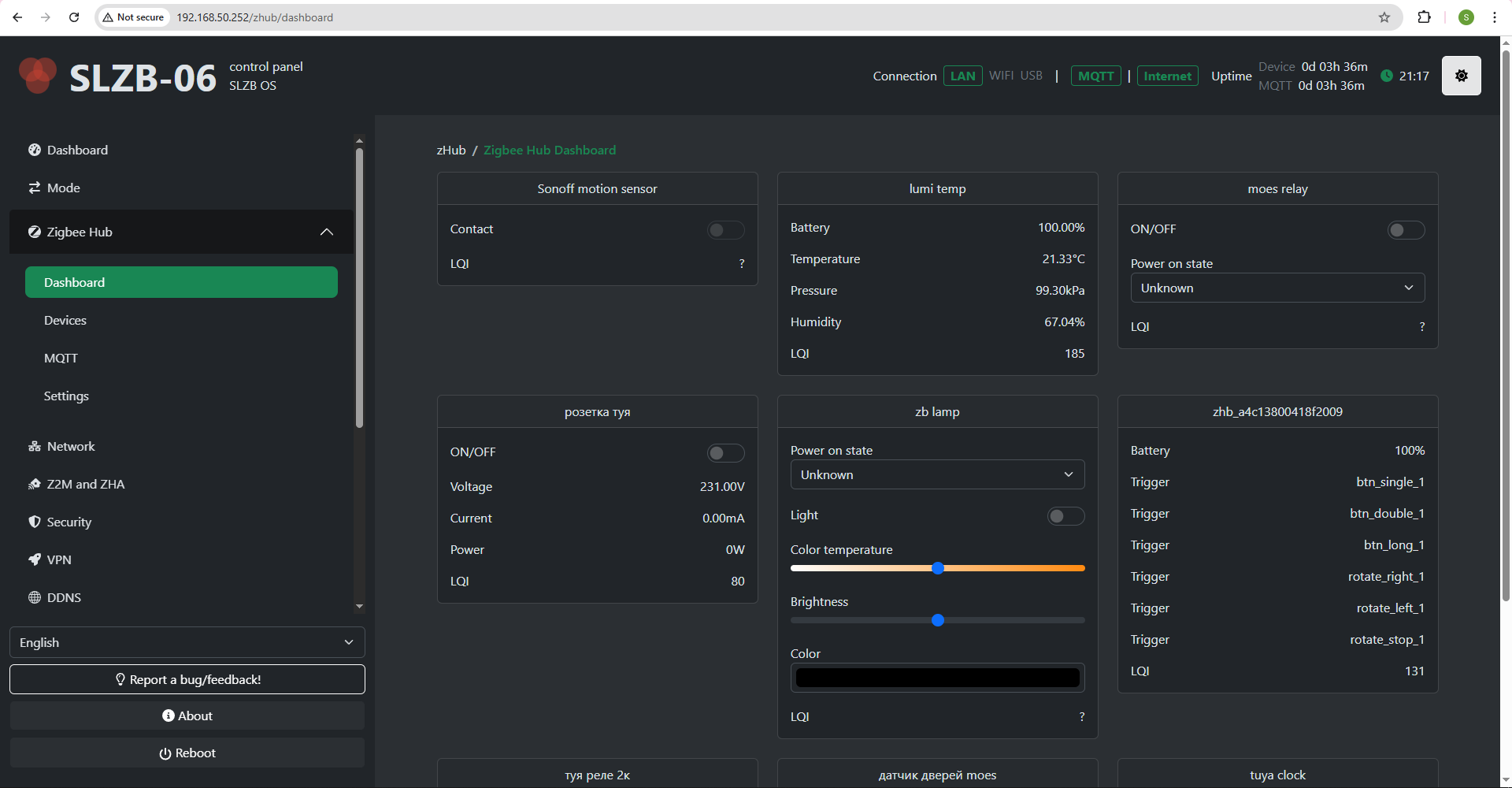
The dashboard contains cards of your ZigBee devices with the data they provide and controls.
The dashboard is updated in real time via SSE.
4.3 Zigbee Hub → Devices
The Devices page lists every Zigbee device paired to your coordinator.
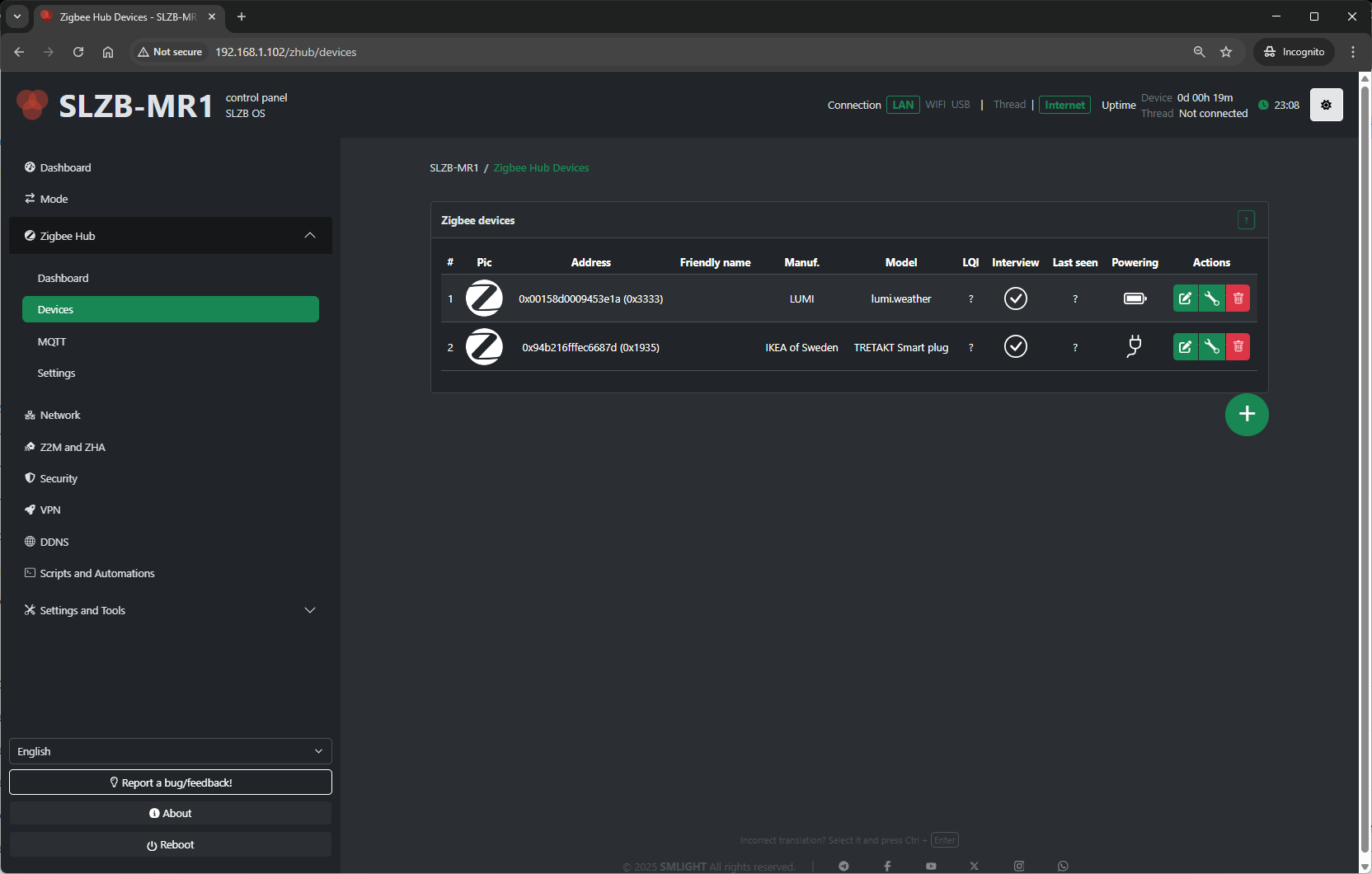
Pairing control:
- Permit Join (+ button on the bottom right side of the device table) – Allow or deny new devices joining the network.
For each device, you’ll see:
-
Name / Friendly Name – Human-readable identifier.
-
IEEE Address – Unique device ID.
-
Network Address – Short Zigbee address assigned by the coordinator.
-
Last Seen – Timestamp of the last communication.
- Powering – Device power source (AC/battery) or ? if the device does not provide information.
-
Link Quality (LQI) – Signal strength indicator.
-
Actions:
-
Rename device
-
Remove/unpair device
-
View device details (clusters, endpoints, bindings)
-
Bind/unbind devices (if supported)
-
Typical uses:
-
Verify devices are online and responsive.
-
Rename devices for easier identification in automations.
-
Remove devices no longer in use.
Device config
How to rename device
Select the pencil icon 
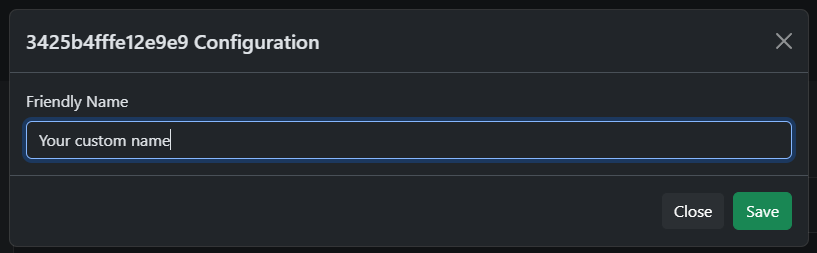
Enter new name and press "Save". Maximum length - 50 characters.
Device config
Click on the wrench
Binding
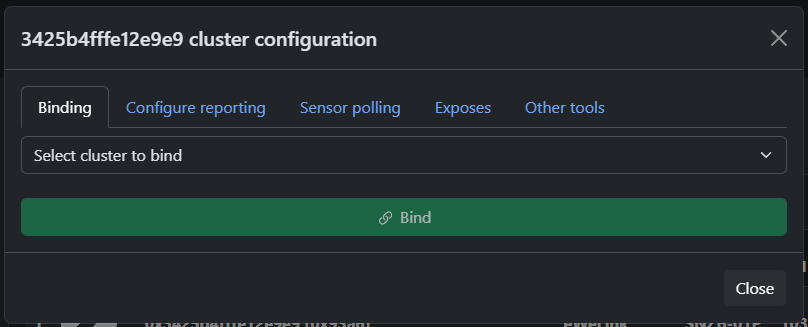
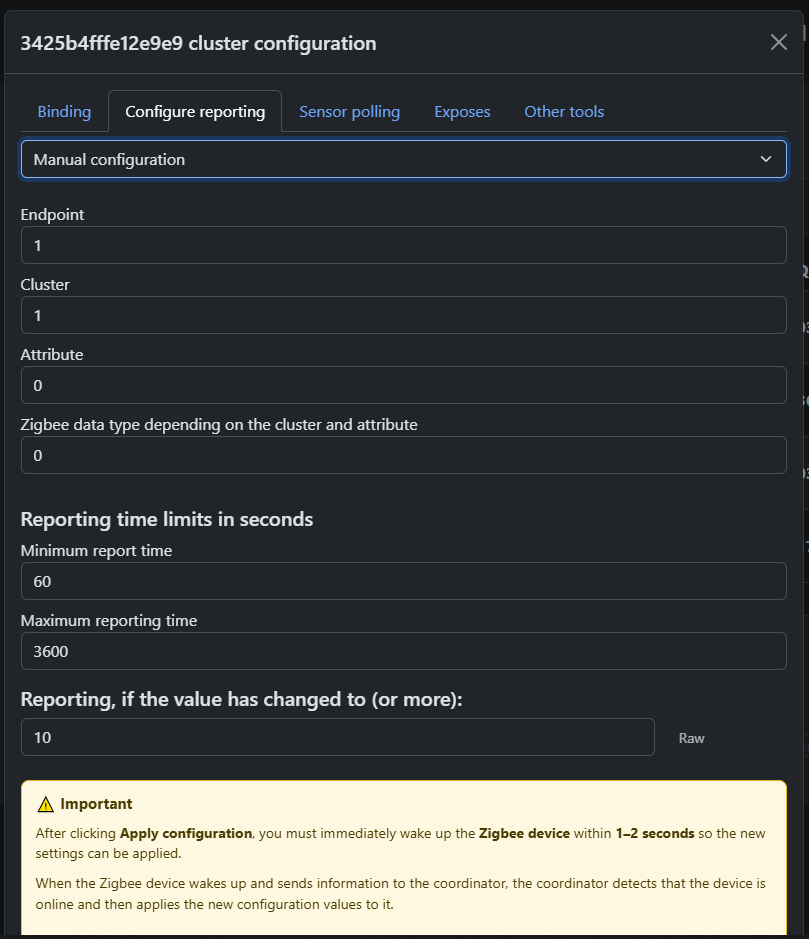
Configure reporting
Polling
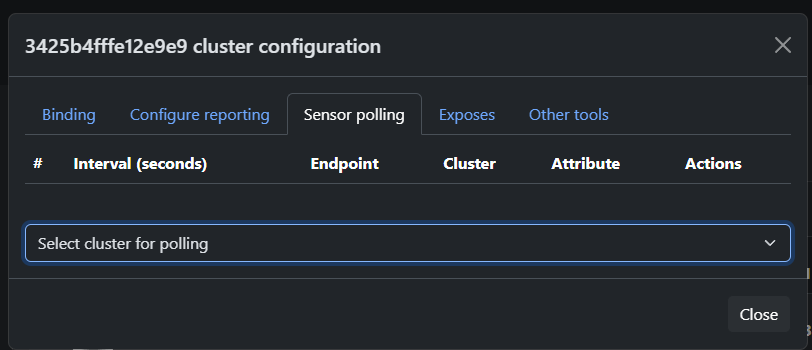
Allows you to configure polling of the selected attribute after a certain time interval
Exposes
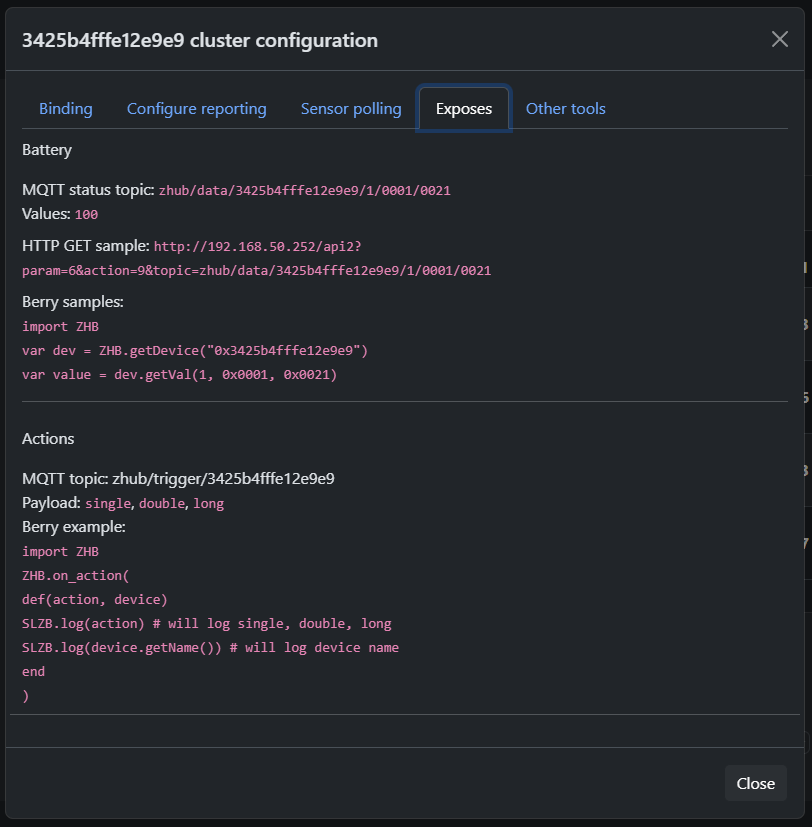
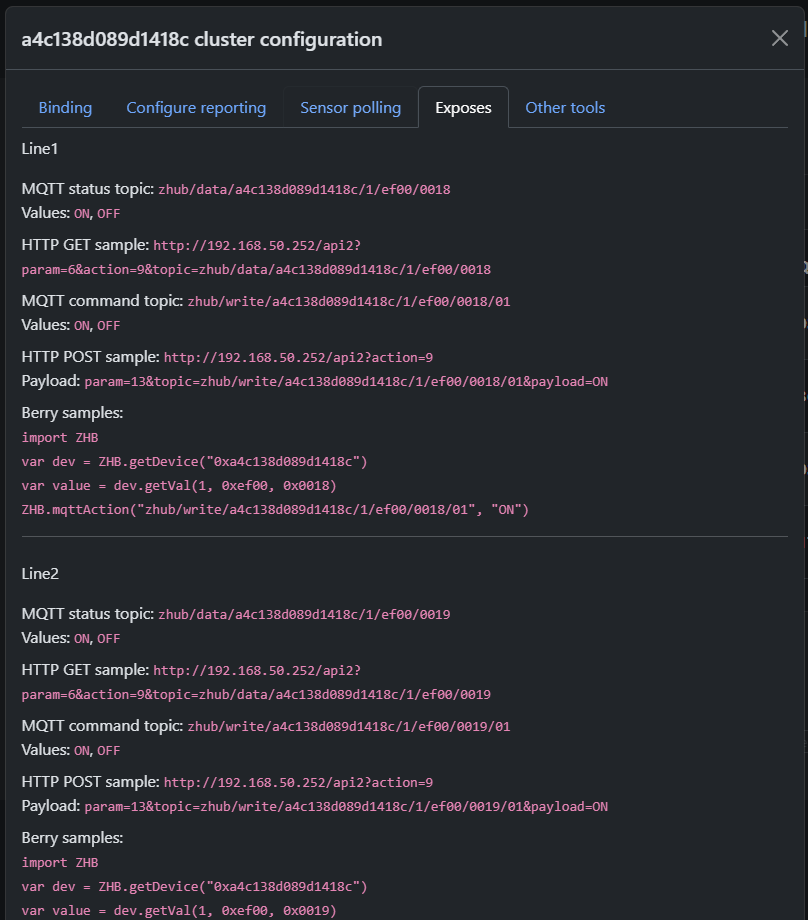
Provides information about expected data from the device and examples of using MQTT, HTTP, and Berry API to get or set device state.
IMPORTANT!
This section provides information about EXPECTED data from the device, based on information about the device clusters or converter (if it exists).
This information may not match the actual behavior of the device if it uses non-standard clusters!
If this is a Tuya DP device, then information will be displayed here only if a converter exists for the device!
Other tools
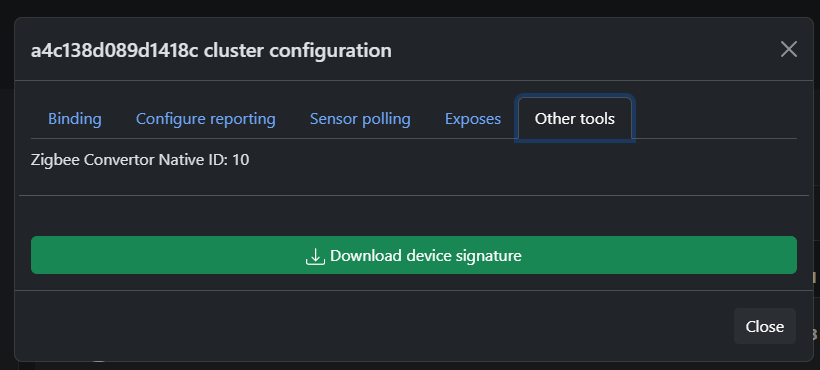
Here you can find the ZCN converter number (if used) and download device information
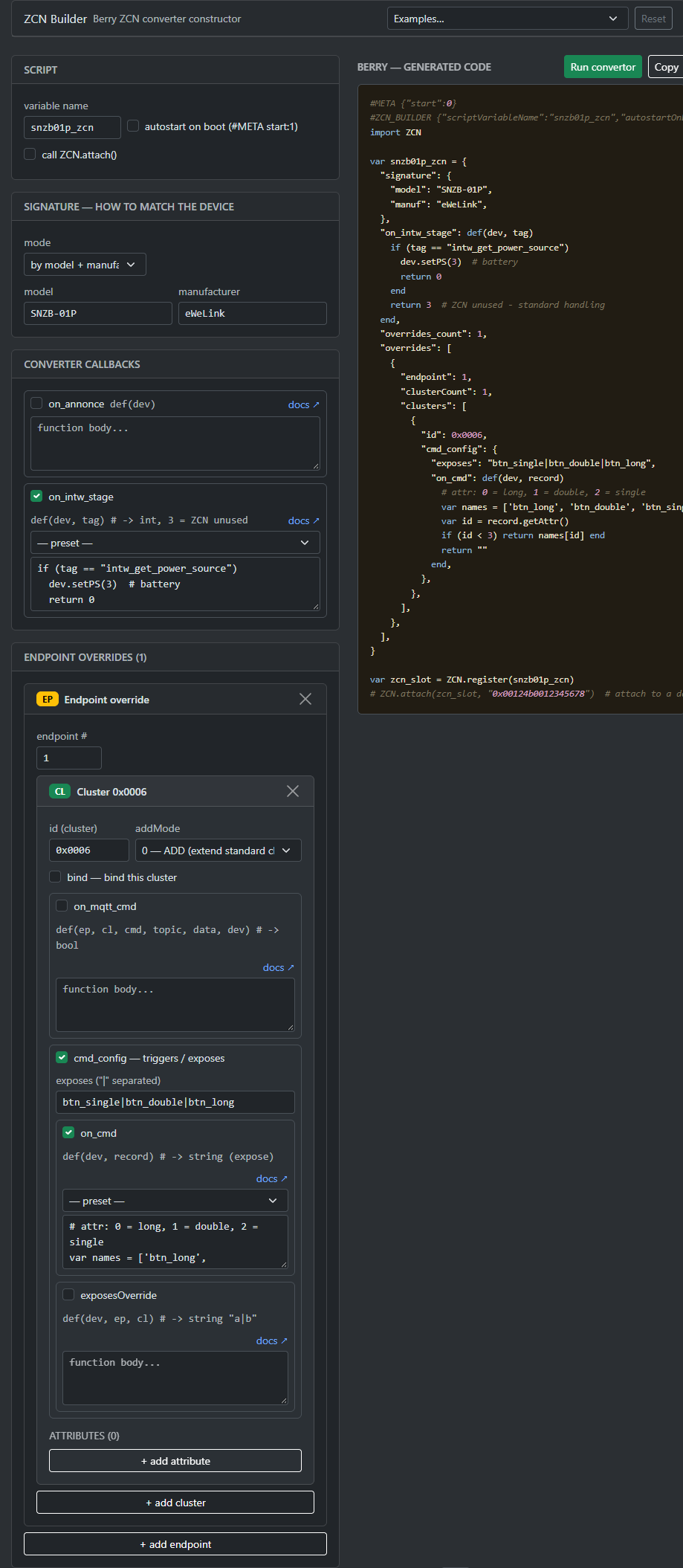
ZCN Builder
A helper tool to facilitate the creation of custom Berry converters for your Zigbee devices.
Full manual: https://smlight.tech/support/manuals/books/slzb-os/page/berry-zcn-system-manual
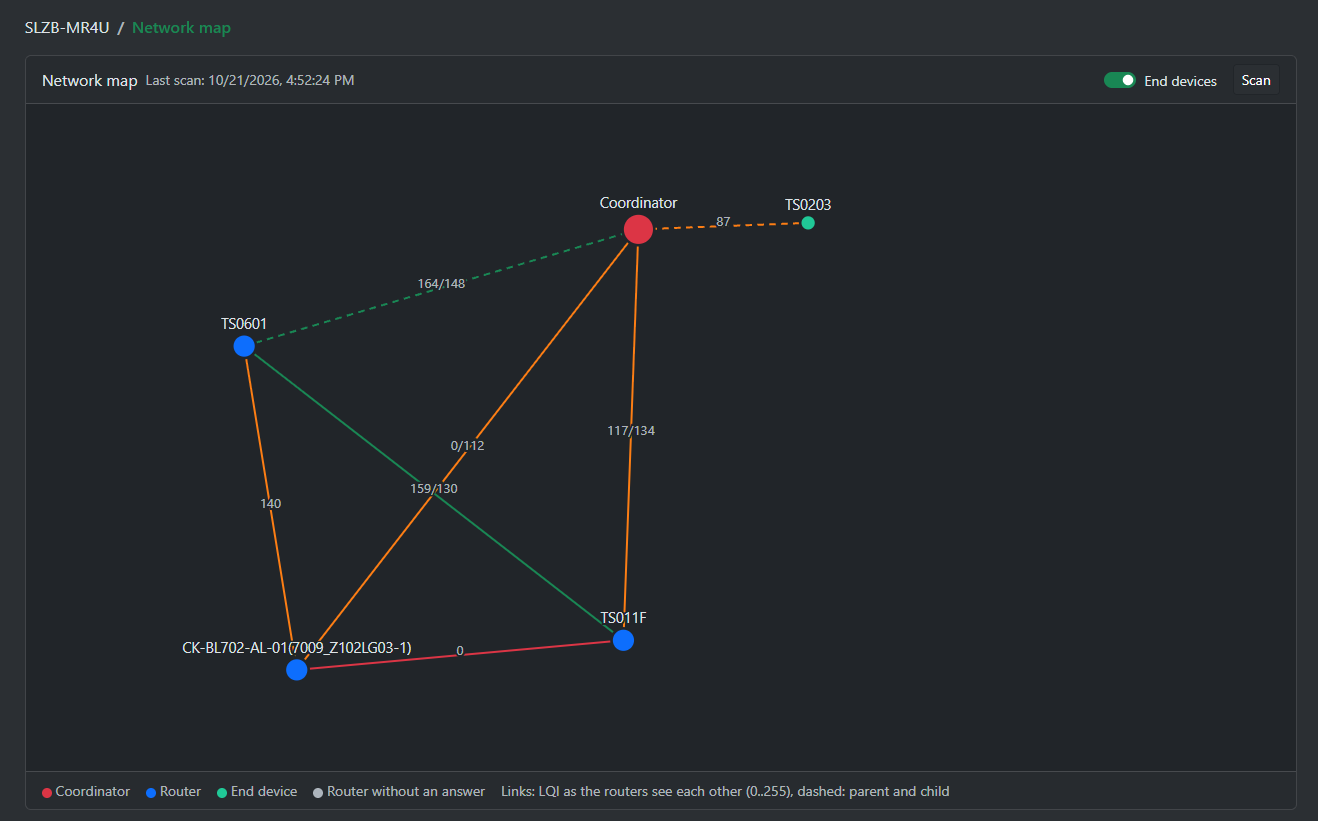
Network Map
Visual representation of your Zigbee network.
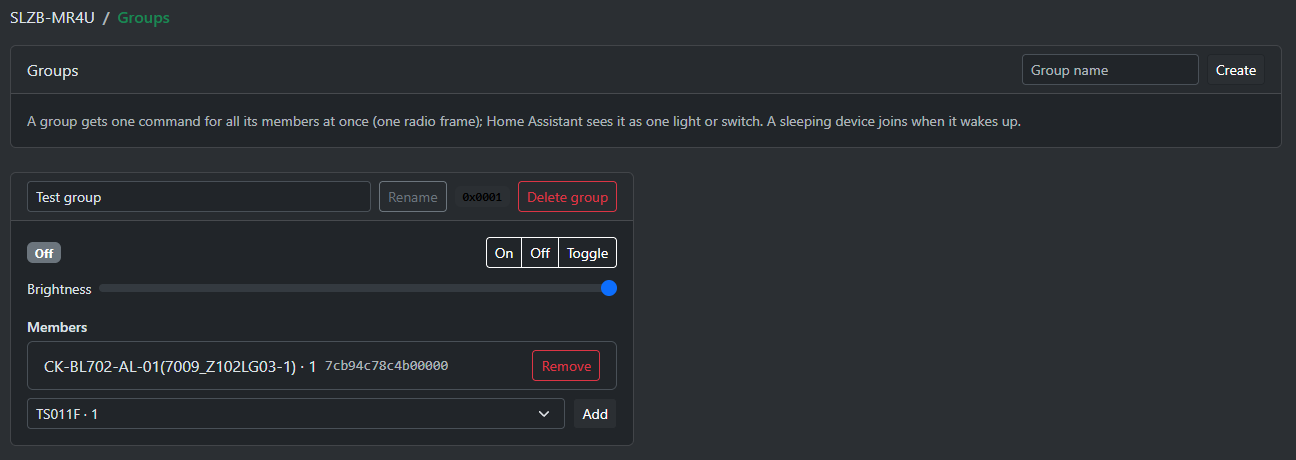
Groups
This page allows you to combine multiple Zigbee relays or lamps into a single group and control them all simultaneously with a single command.
Supports up to 32 groups of 32 members each.
4.4 Zigbee Hub → MQTT
v3.2.4 and later OS versions
Starting with v3.2.4, MQTT can be used independently of the Zigbee Hub and all general MQTT settings have been moved to a separate page.
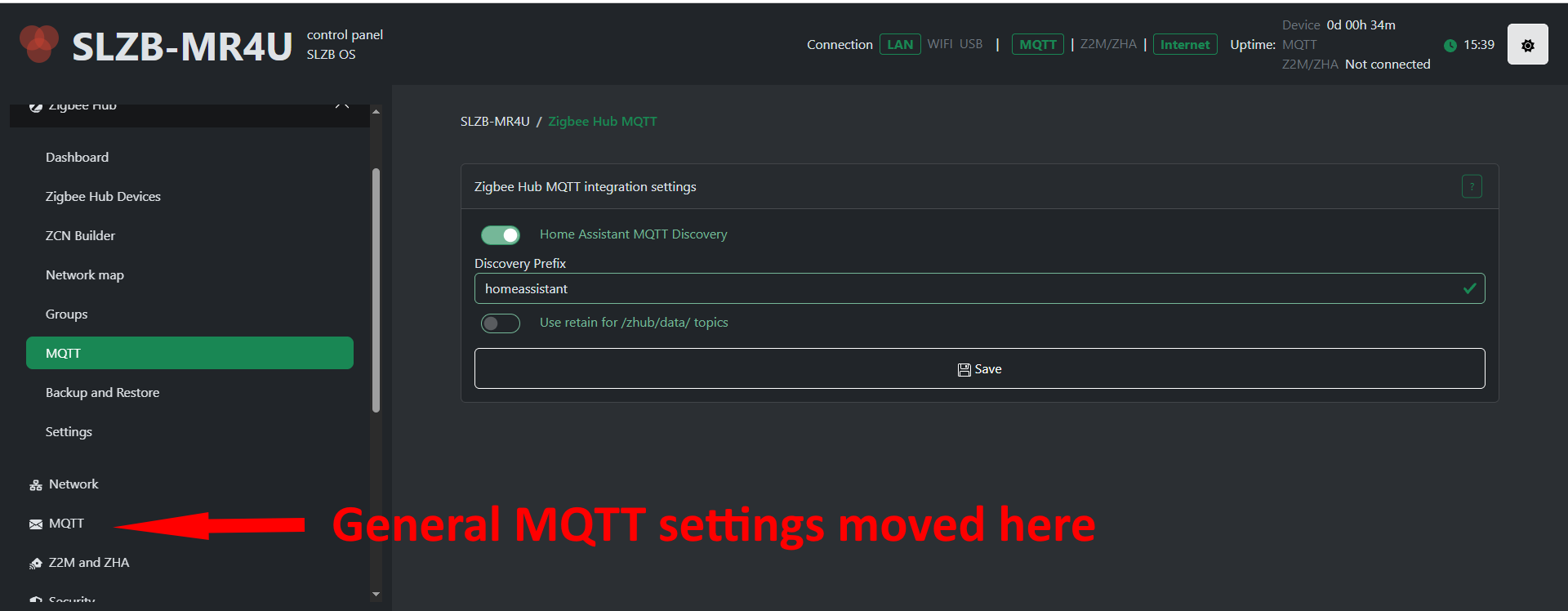
OS versions up to v3.2.4
This page configures the MQTT connection that Zigbee2MQTT (running on SLZB-OS) uses to communicate with your smart home platform.
This screenshot shows an older version of the page
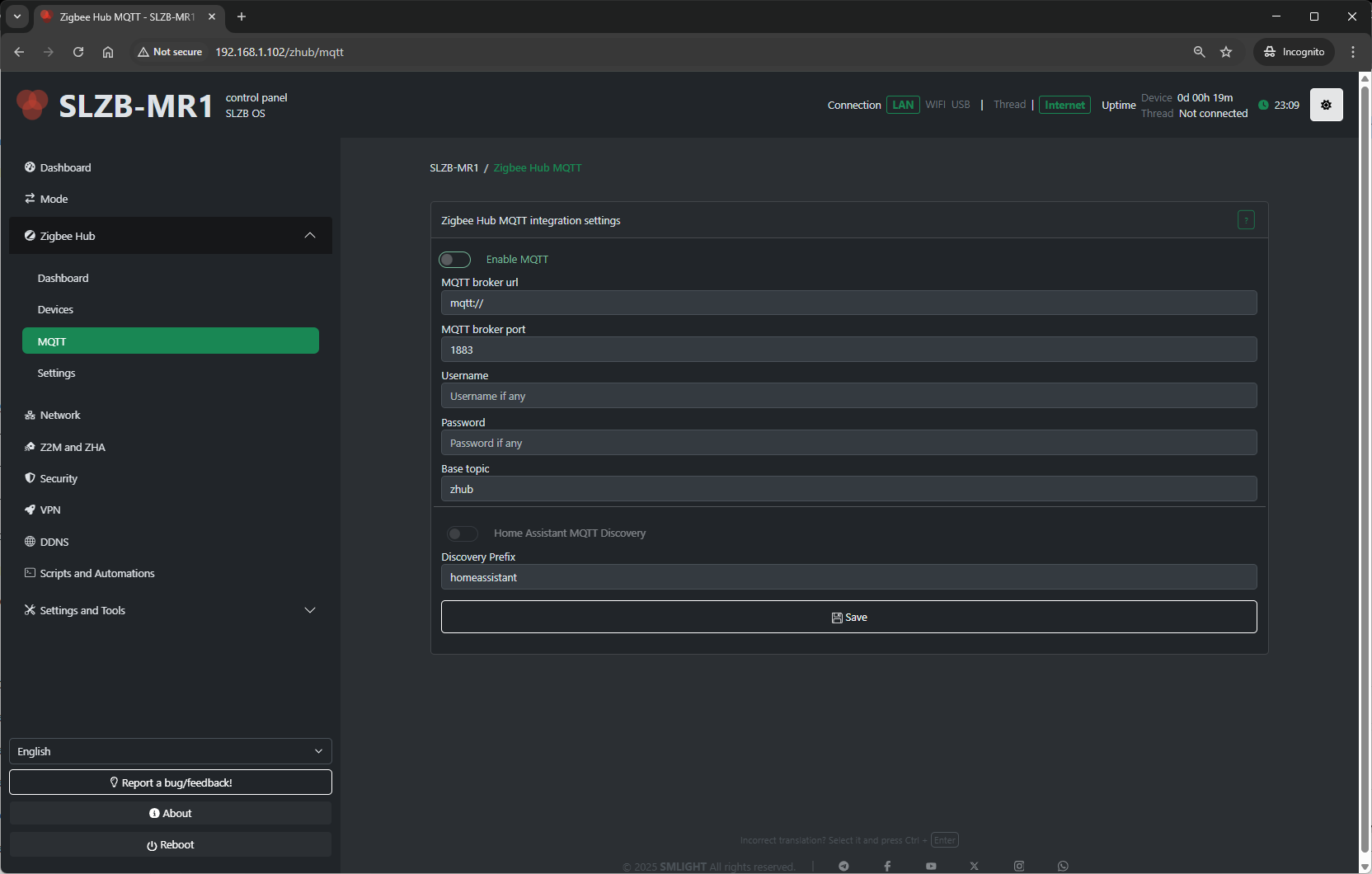
Configuration fields include:
-
MQTT Server Address – IP or hostname of your broker (e.g.,
mqtt://192.168.1.100). -
Port – Default 1883 for MQTT, 8883 for MQTT over TLS.
-
Username / Password – Broker authentication (if required).
-
Base Topic – Topic prefix for Zigbee messages (default:
zigbee2mqtt). - Discovery Prefix - Home assistant main topic name.
Tips:
-
For Home Assistant with Mosquitto add-on, use the HA IP and port
1883. -
Always use a unique base topic if you run multiple Zigbee networks.
-
Save and restart Zigbee Hub after making MQTT changes.
Backup and Restore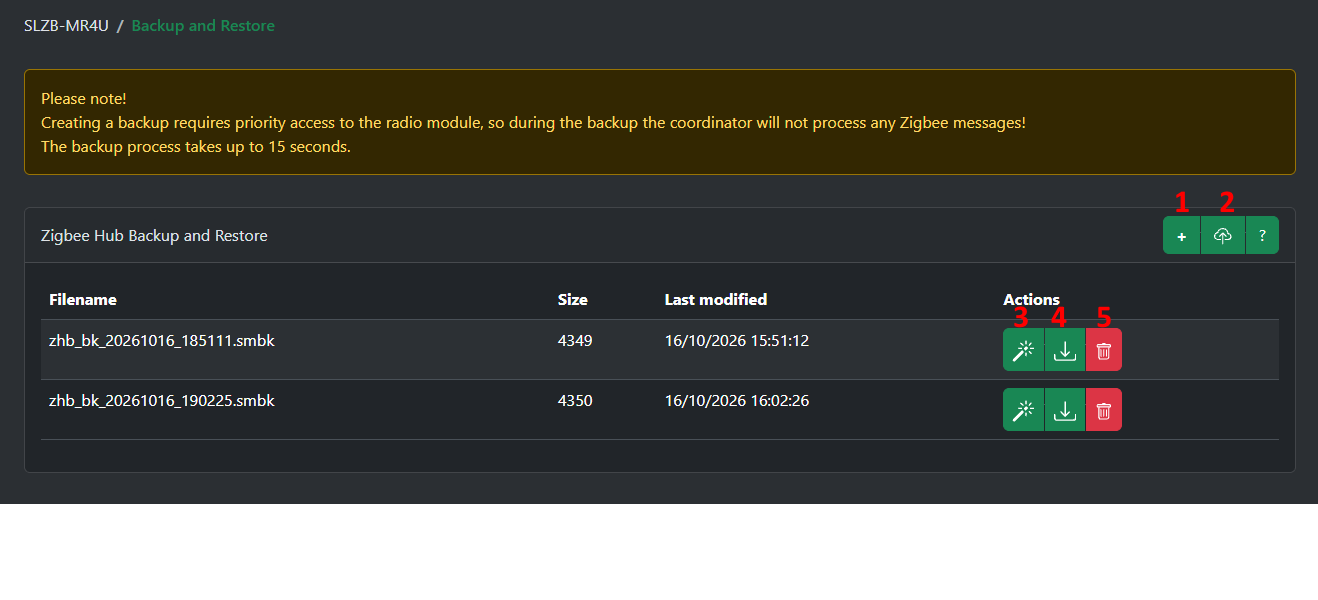
- Creates a new full backup
- Allows you to upload a backup to the device's storage
- Specifies to restore this backup
- Downloads this backup to your PC
- Delete this backup
4.5 Zigbee Hub → Settings
The Settings page contains deeper configuration for the Zigbee coordinator and Zigbee2MQTT service.
v3.4.3.dev3 and later
SLZB-OS uses a well-known default network key!
If you want to achieve maximum security, you should generate a random network key.
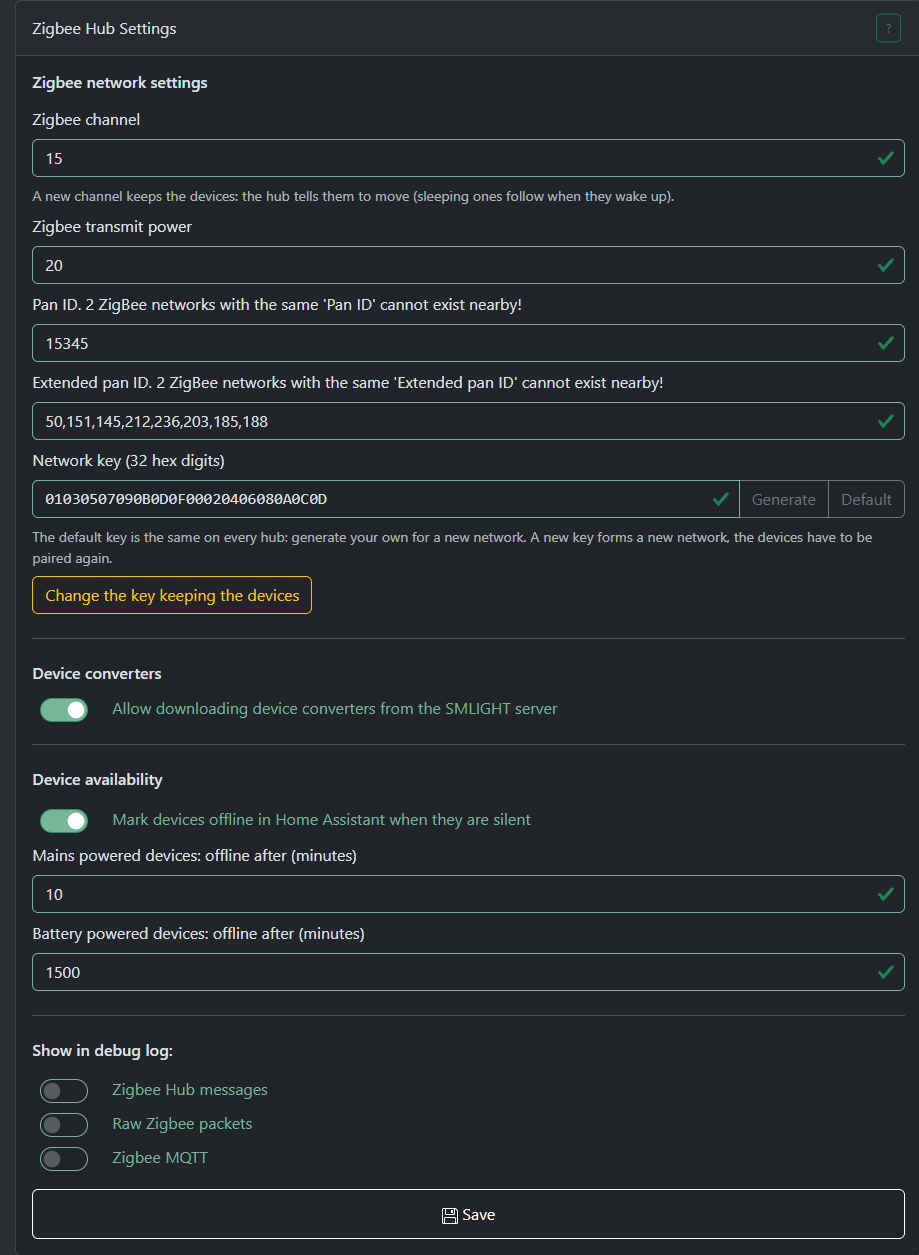
Network key
Generate - generates a new random network key.
Default - sets the default network key.
Change the key keeping the devices - Initiates the network key migration procedure while retaining most of your devices. Some sleeping devices may not receive the new key if they are asleep at the time of migration.
Device converters
Allow downloading device converters from the SMLIGHT server - Enables the downloading (and periodic updating) of special .zcr converters for your paired Zigbee devices. These converters are required to provide support for non-standard Zigbee devices and vendor-locked devices.
When this option is enabled, the Zigbee Hub will send the model and manufacturer of a newly paired Zigbee device to our server to search for an available converter, if one is found, it will be downloaded. NO ANY PERSONAL DATA IS SENDED!
The Zigbee Hub will check for converter updates every 24 hours.
If this option is disabled, support for non-standard Zigbee devices will not be available.
Device availability
Tracks Zigbee packets from your devices and stores the timestamp of the last received packet. If this time exceeds the limit specified in the settings, it will mark the device as unavailable in the dashboard and via MQTT discovery.
Older OS versions
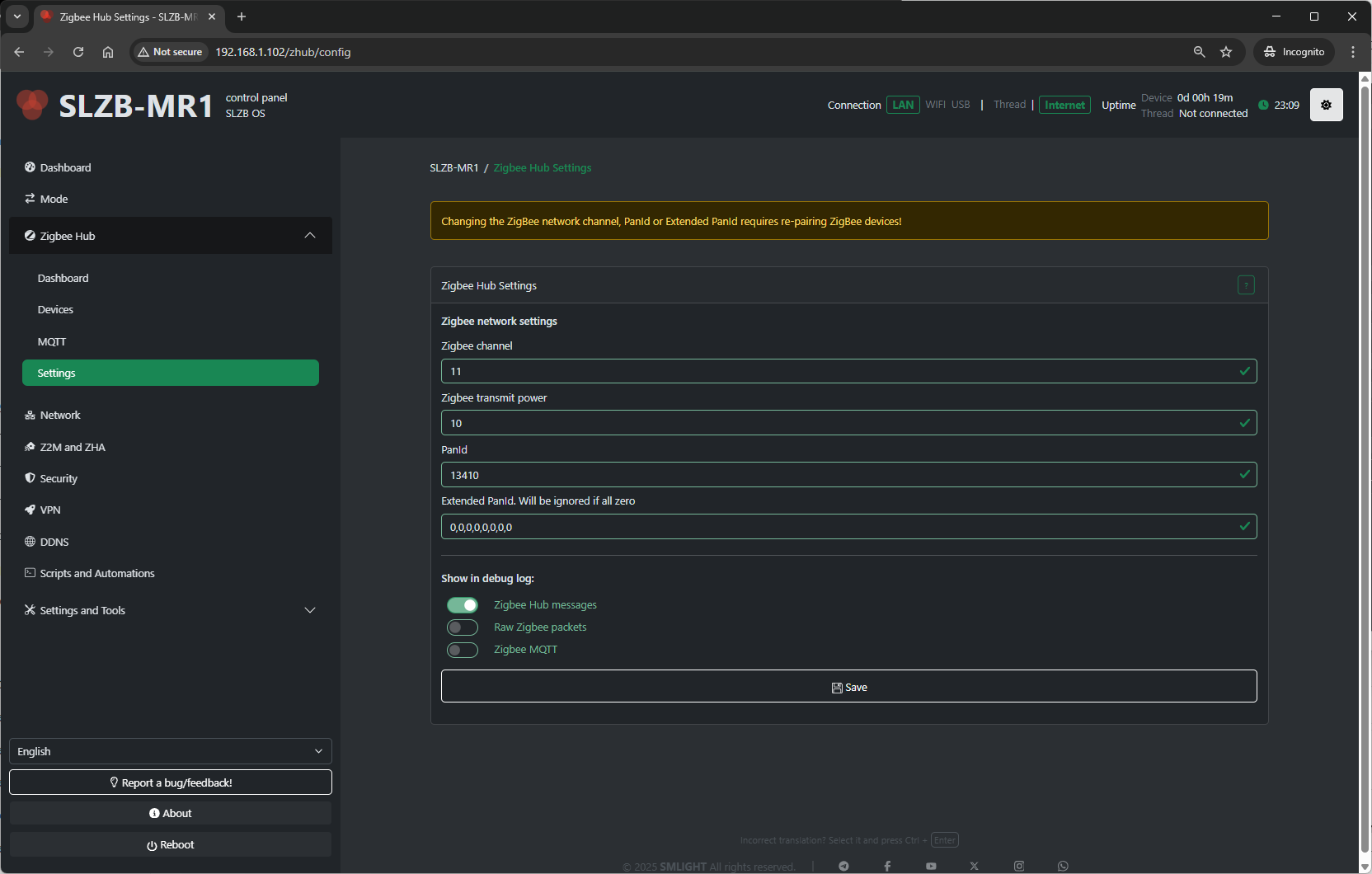
Typical settings available:
-
Network Parameters:
-
PAN ID – Zigbee network identifier.
-
Channel – RF channel (11–26; avoid Wi-Fi overlap if possible).
-
Extended PAN ID – Long network identifier.
-
-
Transmit Power – Radio TX power in dBm (higher = longer range, more power draw).
- Show in debug log - Select which categories of Zigbee-related information are recorded in the Log & Debug page.
-
Zigbee Hub messages – Logs high-level events from the Zigbee Hub service (e.g., device joins, status updates).
-
Raw Zigbee packets – Logs low-level Zigbee frame data; useful for deep protocol debugging.
-
Zigbee MQTT – Logs MQTT messages related to Zigbee communication, including publishes and subscriptions.
-
Best practices:
-
Change the Zigbee channel only on a fresh network (re-pair required after change).
-
Keep
Permit Joindisabled most of the time for security. -
Adjust transmit power to match your coverage needs and regulatory limits.
4.6 Troubleshooting
Problems when starting a Zigbee network
OS v3.0.9 update is breaking. If you updated OS to v3.0.9 and started getting this error then follow the instructions below
- turn off coordinator
- turn off ALL Zigbee routers that were connected to Zigbee Hub. This is important, it will not work without this
- turn on coordinator. Zigbee Hub should start now but zigbee devices will be unavailable
- remove all devices (click on the red trash can)
- download and run berry script below, this script will keep permit join enabled as long as it is running
#META {"start":0}
#Insert your code below
import ZHB

ZHB.waitForStart(0xFF)

while 1
  ZHB.permitJoin(254)
  SLZB.delay(255 * 1000)
end
- repair all devices
- after devices repaired you can stop and delete script
- move the coordinator away from the wifi router
- make sure there is no other coordinator nearby with the same zigbee network settings